
Blog
Trending insights and latest news.
Looking for something specific?

Hey Joel - Can I Avoid an Audit By Splitting my Employees into Two Plans?
Hey Joel - Can I avoid an audit by splitting my employees into two plans? - Fingers Crossed in Florida

Don't Let Your Retirement Plan Turn from Benefit to Liability
A retirement plan is important to your business — and to all the employees relying on it for income later in life. However, mistakes and confusion can turn retirement plans from an attractive benefit into a liability.
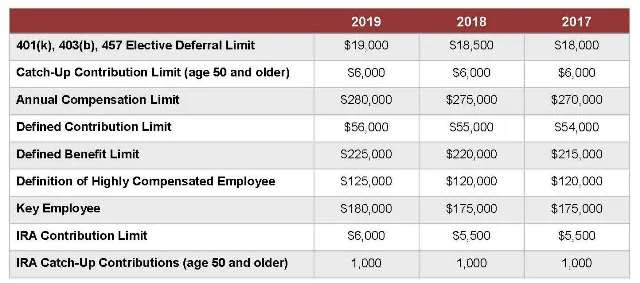
2019 IRS Limits on Retirement Benefits and Compensation
IRS Limits on Retirement Benefits and Compensation

How Do You Monitor a Dash? Evaluating Cash Equivalent Funds
While cash fund due diligence can be intimidating, there are key differentiators among stable value funds that fiduciaries can review to document that a fund is a good fit for their participants.

Beware of the IRS and DOL: Four Red Flags They Seek on Form 5500
Beware of the IRS and DOL: Four Red Flags They Seek on Form 5500
The Form 5500 is an ERISA requirement for retirement plans to report and disclose operating procedures.

Hey Joel - My Prospect is a 501(c)(3) organization that is not affiliated with a church or school. Are they eligble for a 401(k) plan?
Hey Joel - My prospect is a 501(c)(3) organization that is not affiliated with a church or school. Are they eligible for a 401(k) plan? Are there any benefits over a 403(b) plan?

Use Plan Analytics to Evaluate Your Retirement Plan
Your retirement plan is a valuable resource for your employees and serves as a vehicle to attract and retain top talent. Ensuring plan success is crucial. Examining plan analytics can help evaluate its success.

Collective Trusts - The Fastest Growing Investment Vehicle Within 401(k) Plans
For almost a century, collective investment trusts (CITs) have played an important role in the markets. They were originally introduced in 1927. A 2016 study showed that they are the fastest growing investment vehicle within 401(k) plans, with 62 percent of asset managers believing their clients will shift from mutual funds to CITs.¹